
What a Morning at Google Taught Me About AI, Interior Design and the Value of Your Creative Intelligence
By Grant Pierrus, founder of Pierrus Agency
Published 24 February 2026
This morning I was at Google, sitting in a room with architects and interior designers, being walked through their AI ecosystem by Amir Hossein Noori, one of the leading voices on AI in architecture and design. The session covered Gemini, the tools, the workflows. And it was genuinely impressive.
Visual ideas generated in minutes. Spaces visualised before you had finished describing them. Floor plans iterated in real time. The pace of it is startling if you have not experienced it directly.
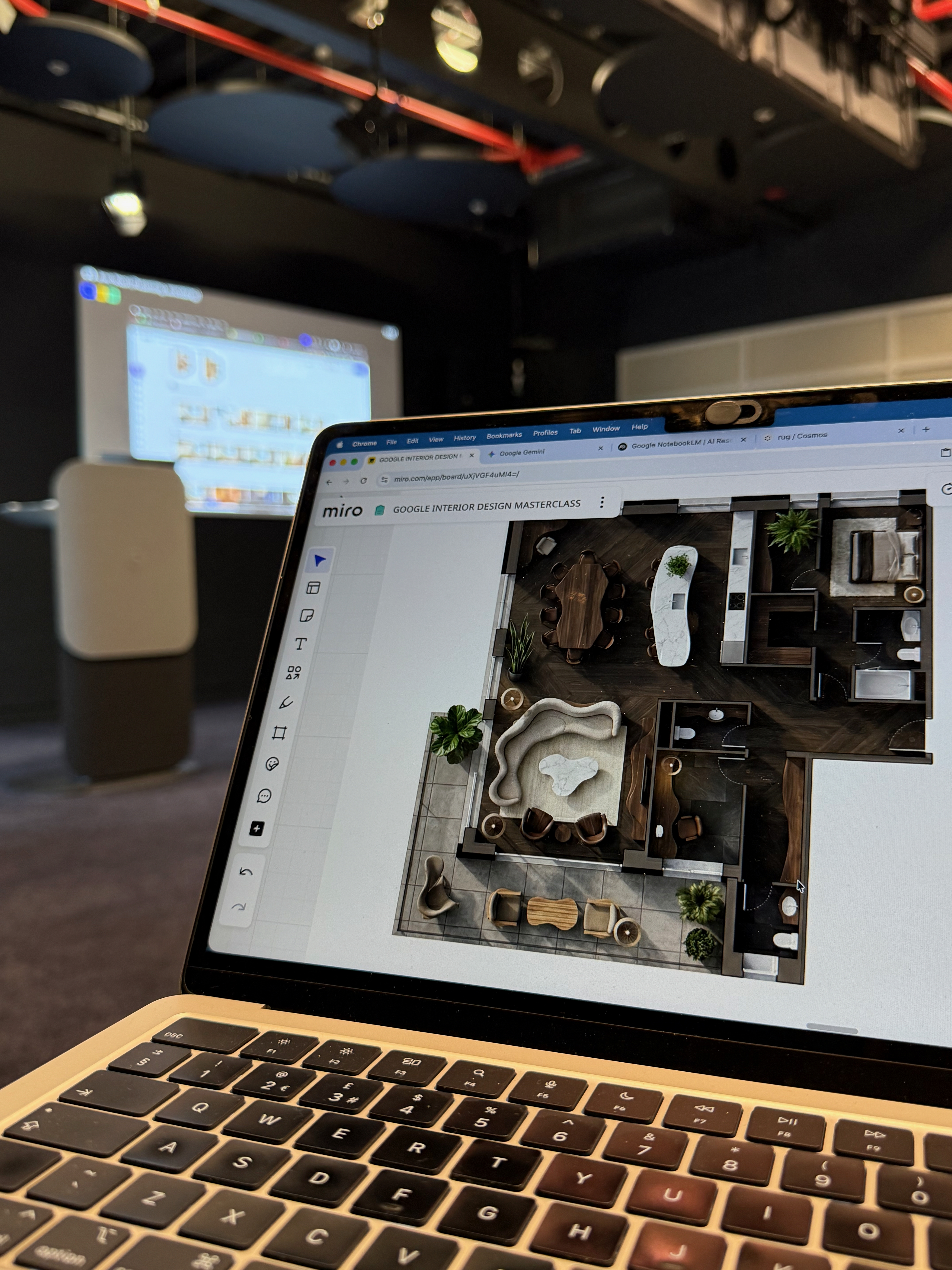
But as the morning unfolded, one observation kept surfacing.
The Central Insight: AI Is a Mirror
The work AI produces is a direct reflection of whoever is directing it.
Not a vague reflection. A precise one. The richness of the output, the spatial intelligence, the material sensitivity, the aesthetic coherence, tracked almost exactly with the richness of the creative direction in your prompt. Better references, sharper taste, more cultivated aesthetic vocabulary: better output. Thin direction produced generic results, regardless of how sophisticated the tool.
Which means AI, for all its speed and capability, is essentially a mirror. And what it reflects back at you is your creative intelligence. Your style. Your references. Your taste.
That observation changes the conversation entirely.

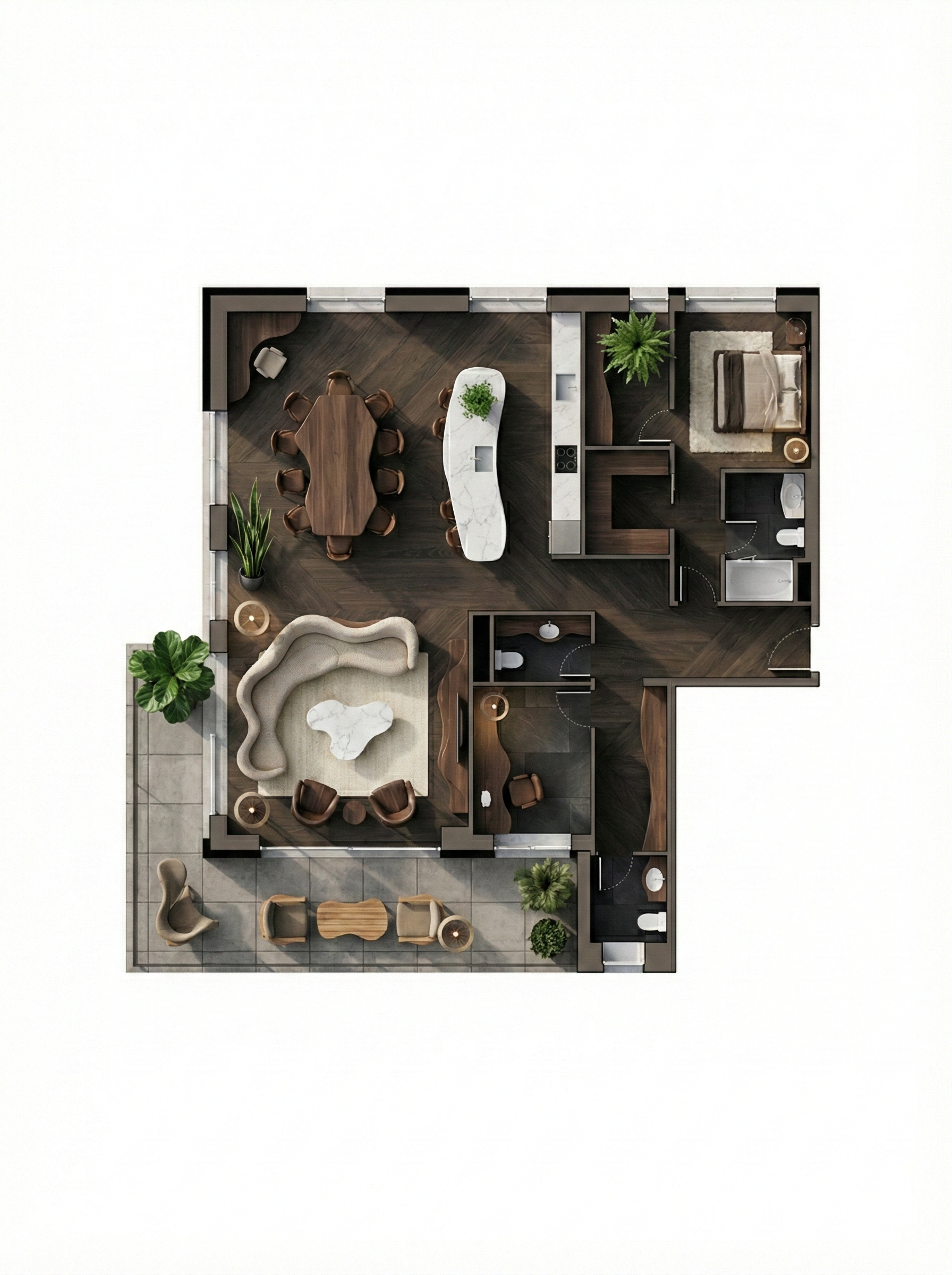
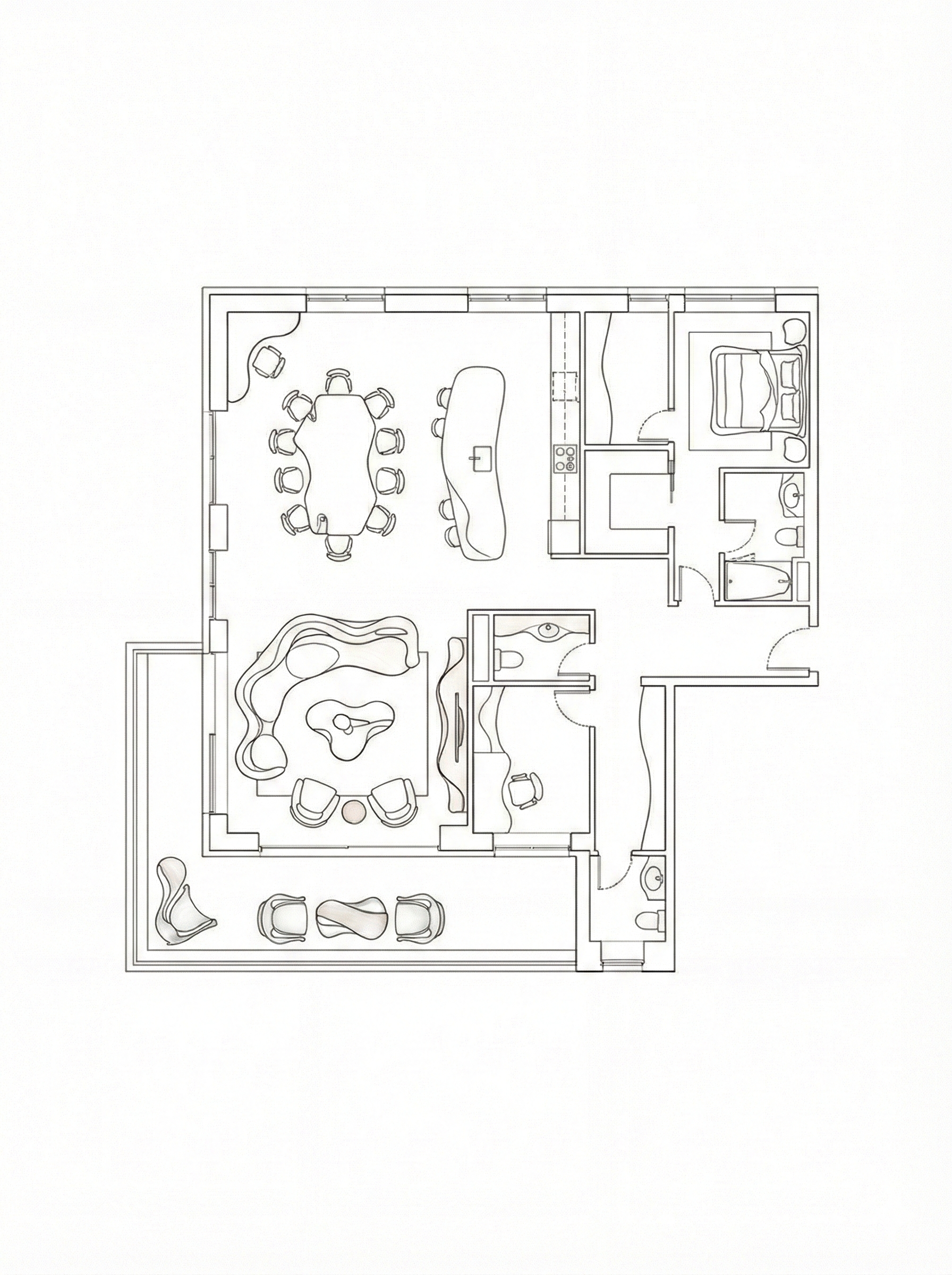
What AI Is Doing to Interior Design Right Now
There is a lot of noise about AI coming for creative work. Some of that is true. The repeatable, transactional, desk-based tasks are being absorbed, and quickly:
- Scheduling and project administration
- Client communication and documentation
- Production drafts and technical drawing iterations
- Mood board assembly and early-stage visualisation
That shift is real and accelerating. But the more interesting question, the one the morning at Google made urgent, is what happens to the work that remains.
The work that requires genuine creative direction. The briefs that need an eye, a point of view, a set of references that nobody else has assembled in quite that way. That work does not get easier to fake as AI improves. It gets harder. Because the tool is now capable enough to show you, in real time, exactly how distinctive or how generic your creative thinking actually is.
The Myth That Is Holding Us Back
This brings me to something I have been sitting with for a while.
The design and other creative worlds run on a powerful myth. The myth of “the eye”, the idea that certain people simply see the world differently, and were born doing so. You hear it everywhere in this industry:
- She just has taste
- He has got the eye
- They are naturally gifted
It is said with admiration, and almost always without question.
That mythology is part of what makes this world compelling. But it carries a cost that almost nobody names.
Research by Karwowski and colleagues found that simply reading about celebrated creative figures, an Einstein, a Jobs, a Monet, caused people to hold stronger beliefs that creativity is innate and fixed. That you either have it or you don’t. The very stories the design world tells to inspire its practitioners are, measurably, convincing them that their own creative ceiling has already been set. I couldn’t quite believe this research myself until I read it through.
Most professional designers and architects I have encountered over a decade in this world have never been seriously asked to treat their creative intelligence as something that requires deliberate investment. Not because they are not serious about their work. But because nobody has built the language or the framework that makes that investment feel possible or necessary.
That is the gap that AI has just made visible.
The Reframe: Your Creative Intelligence Is the Floor, Not the Ceiling
If the quality of your AI output is tied directly to the quality of your creative references, your taste, and your aesthetic vocabulary, and it is, then developing those things is no longer just a matter of professional pride. It is a strategic necessity.
The good news is that creative intelligence is not fixed. It is not a gift you either received or did not. K. Anders Ericsson’s foundational research on expert performance established that mastery in any domain is not the product of innate talent. It is the product of structured, deliberate practice. The same principle applies directly to creative intelligence:
- It is trainable
- It is developable
- It is compound: the more deliberately you invest in it, the more it grows
The creative intelligence you have built so far is the floor, not the ceiling.
The question worth sitting with is this: how much more creative could you be?
That is what this morning at Google made me think about.
References: Karwowski, M., Czerwonka, M., Lebuda, I., Jankowska, D. M., & Gajda, A. (2020). Does Thinking About Einstein Make People Entity Theorists? Examining the Malleability of Creative Mindsets. Psychology of Aesthetics, Creativity, and the Arts, 14(3), 361–366. Ericsson, K. A., Krampe, R. T., & Tesch-Römer, C. (1993). The Role of Deliberate Practice in the Acquisition of Expert Performance. Psychological Review, 100(3), 363–406.
Explore our Marketing for interior designers services, or start a conversation.