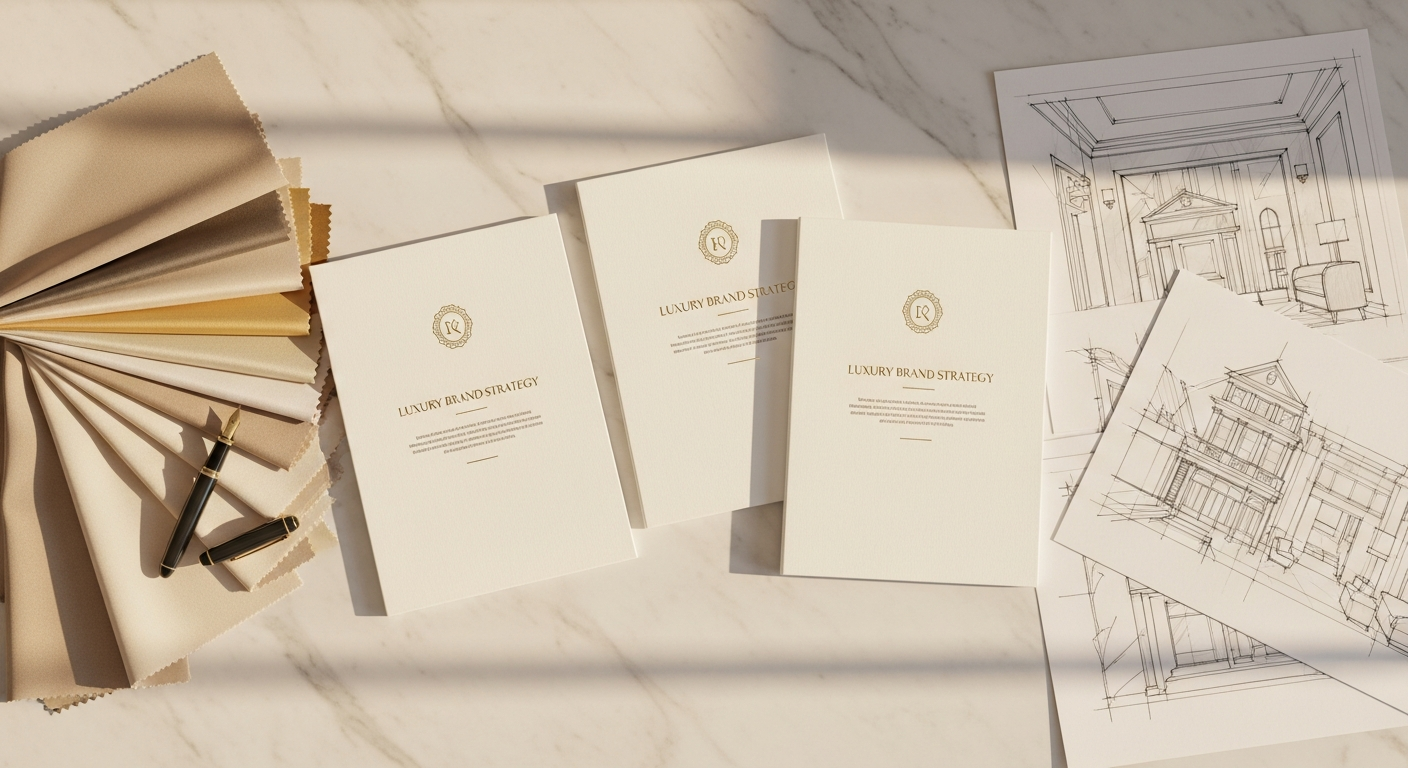
The 3 Brand Decks Every Interior Design Studio Needs
By Grant Pierrus, founder of Pierrus Agency
Published 5 March 2026
Most interior design studios don't have a brand. They have a logo, a website, maybe a moodboard in a shared drive. But a brand? That requires documentation.
I work with design studios every week, and the pattern is always the same. The founder has a clear vision but none of it is written down. Every proposal sounds slightly different. Every Instagram caption is a fresh improvisation. Every new hire absorbs the studio's identity through osmosis.
That's not a brand. That's a personality trapped inside one person's head.
The fix is simpler than most people think. Three focused documents that capture who you are, why you exist, and how you show up.
| Deck | What it answers | What's in it |
|---|---|---|
| Positioning | Why you and not the other fifteen studios? | Category, enemy, audience, what you turn down |
| Narrative | Why should anyone remember you? | Origin story, beliefs, tension, promise |
| Operating Standards | How do we stay consistent without the founder approving everything? | Visual rules, tone of voice, decision filters |
1. The Positioning Deck
This answers the question every potential client is silently asking: why you and not the other fifteen studios I found on Google?
Your positioning deck defines four things. The category you operate in (and how you're redefining it). The enemy you're fighting against. The audience you're choosing to serve. And the work you're choosing to turn down.
Without this written down, you're improvising every time you pitch. I've seen studios where the founder calls the practice “luxury residential specialists” while the associate describes it as “a full-service design consultancy.” Same studio, two completely different stories. Clients can feel that inconsistency even if they can't articulate it.
The studios that get this right win more of the work they actually want. When a client comes to you because of your specialism in heritage conversions, the conversation starts from a completely different place than “we'd love to see your portfolio.”
2. The Narrative Deck
Positioning tells people where you sit in the market. Narrative is what makes them remember you.
Your narrative deck captures your origin story, what you believe, the tension that drives your work, and the promise you make to clients.
Every studio has an origin story, but most never tell it properly. I worked with a studio last year whose founder retrained after fifteen years in theatre set design. That background shaped everything about her approach to residential interiors. But it wasn't mentioned anywhere. Not on the website, not in proposals, not in press materials. Her most compelling differentiator was invisible.
The beliefs section signals values before a single project photo is shown. A studio that believes “great design should outlast trends” attracts a fundamentally different client than one that believes “spaces should reflect how people actually live.” Neither is wrong. But if you haven't articulated which camp you're in, you're leaving that connection to chance.
Tension is the bit most studios skip. What do you see the industry getting wrong? This isn't about being negative. It's about conviction. Clients trust designers with a point of view more than those who seem agreeable about everything.
When your narrative deck is solid, your marketing practically writes itself. Blog posts, social captions, PR pitches, award submissions: they all draw from the same well.
3. The Operating Standards Deck
This is where most people's idea of “brand guidelines” lives, but framed practically rather than as a PDF that collects dust. It covers three things: visual rules, tone of voice, and decision filters.
Visual rules
Typography, colour, image style, layout principles. These matter, but they're the least important part of this deck. Designers are visual people. You've probably got a reasonable handle on this already.
Tone of voice
This is where things fall apart. Your Instagram showcases beautiful spaces, but the captions, the newsletters, the proposals: that's all language. If it hasn't been defined, everyone defaults to their own style.
I've seen studios where the website sounds warm and irreverent while the proposals read like a corporate solicitor wrote them. That disconnect kills trust before the first meeting.
Decision filters
The secret weapon. Should we post that meme? Does this project fit our portfolio? Should we sponsor this event? Decision filters let your team make brand-consistent choices without running everything past the founder.
Without them, the founder becomes a bottleneck. With them, you've given your team doctrine instead of just taste.
What improvisation actually costs you
Most studios don't notice the cost because it's death by a thousand cuts. The client confused by the disconnect between your website and your first meeting. The associate who described your practice differently at a networking event. The social content posted sporadically because nobody's sure what the studio “should” be saying.
These feel like normal friction. But they compound. Over five years, the studios that have documented their brand outperform those that haven't. Not because documentation is magical, but because creating it forces clarity. Most studios aren't short of talent or taste. They're short of a clearly articulated position that everyone can communicate consistently.
Where to start
Start with positioning. It's the foundation the other two build on. Sit down with someone who can challenge your assumptions and answer these four questions:
- What do we do better than anyone else?
- Who is our ideal client, specifically?
- What work do we turn down, and why?
- If we disappeared, what would the market be missing?
If your answers are vague (“beautiful, functional spaces for discerning clients”), you've got more work to do. If they're specific (“adaptive reuse of heritage buildings for private residential clients in London”), you've got the bones of a positioning deck. The narrative and operating standards decks follow naturally from there. For the full strategic framework behind these documents, our guide to brand strategy for interior designers covers positioning, differentiation, and how to translate strategy into commercial results. And to understand why the frame around your work matters as much as the work itself, Brand Elevation for Design Studios examines what fashion’s biggest brands just did to close their perception gaps.
Grant Pierrus is the founder of Pierrus Agency, a brand strategy and marketing agency for interior designers. He's running a full-day masterclass, Build Your Interior Design Brand, with Business and Interiors Academy on 16th June 2026.
Frequently Asked Questions
What is brand strategy for interior designers?
Defining how your studio is positioned, what story you tell, and how you communicate consistently across every touchpoint. It goes beyond logos and colour palettes into the strategic foundations that shape how clients perceive you.
Do small interior design studios need brand guidelines?
Yes, arguably more so than large firms. In a small studio, the founder's taste serves as the de facto brand guide. But as soon as you hire anyone, you need documented standards. Otherwise every new person brings their own interpretation of your brand.
How long does it take to create a brand positioning deck?
The document can be drafted in a day. But the strategic conversations that inform it often take several weeks. The writing is the easy part. The thinking is where the real work happens.
What's the difference between a brand deck and brand guidelines?
Traditional brand guidelines focus on visual standards: logo usage, colour codes, typography. A brand deck is more strategic, capturing positioning, narrative, and operating principles that guide decision-making, not just design execution.
Explore our Marketing for interior designers services, or start a conversation.