Brand Strategy for Interior Designers: Beyond the Visual Identity
By Grant Pierrus, founder of Pierrus Agency
Published 22 February 2026
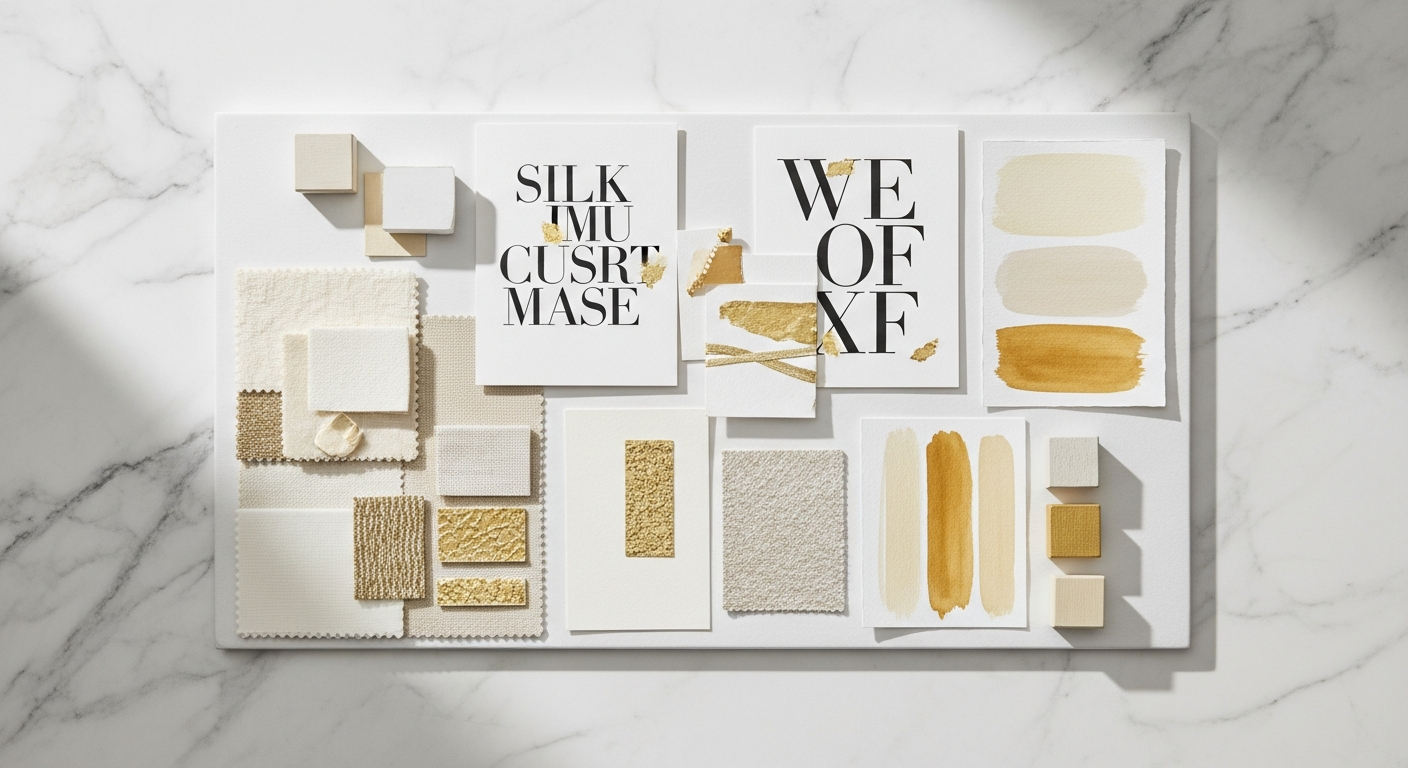
Most advice about branding an interior design business starts in the wrong place. It starts with logos. Colour palettes. Typography. A mood board that feels right.
That is brand identity. It is not brand strategy.
And the difference between the two is the difference between a practice that attracts the right clients at the right fees - and one that looks beautiful but struggles to explain why it exists.
This guide is about the strategy side. The thinking that sits underneath every visual decision, every piece of content, every conversation with a prospective client. If you are running an interior design practice - or a supplier selling to designers - this is the work that changes the trajectory of the business.
Not a new logo. A clear position.
Brand Strategy Is Not Brand Identity
Here is what happens in most practices. The principal designer decides the brand needs updating. They hire a graphic designer or a branding agency. Six weeks later, they have a new logo, a refined colour palette, new business cards, maybe a refreshed website. It looks polished. It feels expensive.
And nothing changes.
The enquiries are the same. The wrong clients still get through. The website still does not convert. The social media still feels like noise.
This is the most common problem I see across the 50+ design practices I have worked with. The identity is strong. The strategy is absent.
Brand identity is the visual expression - logo, typography, photography, colour, the way things look and feel.
Brand strategy is the thinking underneath - who you are for, what you stand for, and how you are positioned against every alternative.
Identity without strategy is decoration. A beautiful visual identity sitting on top of confused strategy just makes confusion look polished.
If you cannot articulate your positioning in a single clear sentence before you brief a designer on your logo, you are building the house before the foundations.
The Three Questions Every Interior Design Practice Must Answer
Every interior design brand strategy comes down to three questions. They sound simple. Most practices cannot answer them clearly.
1. Who is this practice for?
Not “anyone who wants good design.” Specifically, who.
Think about geography. Are you a London practice that works nationally, or are you rooted in the Cotswolds? Do you work internationally, or within a two-hour radius?
Think about project type. Full house renovations? High-end kitchens? Hospitality? Developer show homes? Each attracts a different client with different expectations.
Think about budget tier. A practice that handles £50K fit-outs and a practice that handles £2M whole-house renovations need entirely different positioning - even if the design skill is comparable.
Think about the client themselves. Are they time-poor professionals who want someone to handle everything? Are they design-literate clients who want collaboration? Are they property developers who need speed and reliability?
The clearer this answer, the more effectively every other part of your marketing works.
2. What is this practice known for?
This is your design identity and point of view.
Some practices are known for colour. Some for restraint. Some for period property restoration. Some for bold contemporary insertions into listed buildings. Some for a particular material sensibility - stone, timber, raw plaster.
The problem: most practices describe themselves the same way. “Timeless design.” “Attention to detail.” “Bespoke interiors.” These phrases mean nothing because everyone uses them.
Your design identity needs to be specific enough that someone could recognise your work without your name attached. If they cannot, the brand does not yet have a point of view.
3. Why should someone choose this practice over every alternative?
This is differentiation. The hardest question. And the one most practices avoid entirely.
Differentiation does not mean being objectively better. It means being the obvious choice for a particular type of client, project, or outcome.
A practice that specialises in listed Georgian townhouses in Bath has differentiation. A practice that is “one of London’s leading interior designers” does not.
A fabric house that is known as the go-to for handwoven linens in muted, natural tones has differentiation. A fabric house that offers “a wide range of luxury fabrics” does not.
Answer all three questions with specificity, and you have a brand strategy. Everything else follows.
Positioning Your Practice in a Crowded Market
The interior design market is full of practices that describe themselves in identical language. Hundreds claim to create “timeless, bespoke interiors for discerning clients.” None of them stand out. That is the point - those words have been emptied of meaning.
Interior design brand positioning requires a deliberate choice. Here are four frameworks that work.
Position by project type. Become the practice known for high-end kitchen and bathroom design. Or boutique hospitality. Or single-dwelling new builds. Specialisation signals expertise.
Position by design philosophy. A practice built around biophilic design principles, or around the Japanese concept of wabi-sabi, or around maximalist colour - each of these is a position. It gives people a reason to come to you specifically.
Position by market tier. Own a tier. If you work at the £500K+ project level, your entire brand should signal that - portfolio, language, pricing structure, client experience. Trying to serve three tiers simultaneously confuses everyone.
Position by geography. A practice that is the definitive interior design name in Edinburgh, or the Chilterns, or rural Suffolk, has a powerful position. Geography-based positioning is underrated.
The instinct is always to keep things broad. “We don’t want to limit ourselves.” But broad positioning attracts average work. Specificity attracts premium work, because specificity signals confidence. And confidence is what clients are buying at the higher end.
This is one of the reasons why two designers with the same skills charge wildly different fees. The one with a clear position commands higher fees. The one trying to be everything competes on price.
Brand Strategy for Both Sides - Designers and Suppliers
Interior design brand strategy is not only for design practices. It matters just as much for the suppliers and makers on the other side of the specification.
For designers: your brand strategy determines which clients find you. It filters enquiries before they arrive. It tells potential clients whether your practice is the right fit before they pick up the phone. When brand strategy is working, the people who enquire are already predisposed to work with you.
For suppliers: your brand strategy determines how designers perceive your products. Whether they see you as appropriate for a £500K residential project or a budget fit-out. Whether they remember you when writing a specification. Whether they trust the quality, lead time, and finish.
I work with both sides of this relationship. And the pattern is consistent: when a supplier has a clear brand - a defined aesthetic, a known quality tier, a reliable point of view - designers specify with confidence. When a supplier tries to be everything to everyone, they become interchangeable. And interchangeable means replaceable.
The intersection matters too. A designer with a clear brand specifying a supplier with a clear brand creates trust for the end client. The whole chain holds together. This is why brand clarity is not a vanity project - it is commercial infrastructure.
Personal Brand vs Practice Brand
For founder-led design practices, there is an additional question: is the brand the person, or the practice?
At the luxury residential level, the answer is almost always the person. Clients at this tier are hiring the designer, not the company. They want to know who will be in their home, making decisions about how they live. The chemistry matters. The personal reputation matters.
When personal branding for interior designers works best:
Luxury residential, where trust and personal chemistry drive the decision. Clients are investing a significant sum and want to know the individual behind the work. A strong personal brand - visible online, clear in point of view, consistent in voice - builds that trust before the first meeting.
When the practice brand needs to be stronger:
If you plan to sell the business. If you want to hire senior designers who lead projects under the practice name. If you want the brand to outlast your direct involvement. In these cases, the practice brand must hold weight independently.
The balance: Most successful practices hold both. The founder’s personal brand drives visibility and credibility. The practice brand provides the structure, the systems, and the client experience. The founder is the face. The practice is the engine.
If you are the sole designer and plan to stay that way, lean into the personal brand. If you have ambitions beyond yourself, invest in the practice brand early - before you need it.
How Brand Clarity Translates to Commercial Results
This is where strategy stops being abstract and starts generating returns.
Clear positioning drives better SEO. When you know exactly what your practice is known for, you know what to write about, what to rank for, and what pages your site needs. A practice positioned around listed building renovation can target those terms specifically. A practice that does “a bit of everything” has no clear content strategy. For more on this, the insider guide to marketing for interior designers covers visibility in depth.
Clear positioning drives better referrals. When someone asks a friend for an interior designer recommendation, they need to be able to describe you in one sentence. “She does incredible colour work in period properties” is a referral. “She’s a really good interior designer” is not. The specificity of your brand determines the quality of word-of-mouth.
Clear positioning drives better client quality. When the brand is clear about who it is for, the wrong clients self-select out. They look at the portfolio, read the messaging, sense the price tier, and move on. This is a feature, not a problem. Every wrong enquiry costs time and energy. Clear positioning protects both.
Clear positioning drives higher fees. A positioned practice does not compete on price. It competes on fit, reputation, and expertise. Clients are willing to pay more for a practice that clearly understands their world - and says so. This is the dynamic explored in why two designers with the same skills charge wildly different fees. The answer is almost always positioning.
A Brand Strategy Framework for Interior Design Practices
Here is a practical framework. Four stages. No jargon.
Stage 1: Audit
Before you define anything, understand where you are now.
- What do people actually say about your practice when you are not in the room?
- What do you currently rank for in search? (Check Google Search Console.)
- What enquiries are coming in - and which ones are the right fit?
Stage 2: Define
Answer the three questions above. Who is this for? What are you known for? Why should someone choose you?
Stage 3: Express
Website architecture: Build the site around your positioning. If you specialise in listed buildings, there should be a dedicated page for that work. If you serve a specific geography, make it prominent.
Portfolio curation: Show the work you want more of. Remove the work that contradicts your positioning, even if it was a good project. The portfolio is a sales tool, not an archive.
Social voice: Consistency matters more than volume. A clear, recognisable voice that reflects your positioning - posted consistently - outperforms scattered content every time.
Stage 4: Embed
Strategy only works if it is applied consistently across every touchpoint.
Your email signature. Your proposals. The way you answer the phone. The way project photos are shot and described. The referral networks you invest in. The directories you list on.
Every interaction is either reinforcing your position or diluting it. There is no neutral.
This is not a one-week exercise. It is ongoing. But the initial clarity - stages one and two - can happen in a matter of days. If you want help with it, that is what we do.
If you want to understand what brand elevation looks like in practice, Brand Elevation for Design Studios examines what fashion’s biggest brands just did to close their perception gaps - and what design studios can learn from it. And if you want the practical toolkit, The 3 Brand Decks Every Interior Design Studio Needs breaks the strategy into three focused documents. For studios ready to invest in creative differentiation, what a morning at Google revealed about AI and creative intelligence explores why your taste and references are becoming your most valuable strategic asset.
Frequently Asked Questions
How do you brand an interior design business?
Start with strategy, not visuals. Define who your practice is for, what you are known for, and why someone should choose you over every alternative. Then translate those answers into messaging, website architecture, portfolio curation, and a consistent voice across every touchpoint. The logo comes last. Read more in the insider guide to marketing for interior designers.
What makes a luxury interior design brand?
Specificity, not adjectives. A luxury interior design brand requires a clear point of view, a curated portfolio that signals the right project scale, pricing confidence, and a client experience that reflects the quality of the design work itself. Saying “luxury” is not enough - the positioning must be evident before a word is spoken.
How do interior designers build a personal brand?
Personal branding for interior designers means being visible and consistent with a clear point of view. Share your design perspective through content. Speak about your process openly. Let potential clients understand who you are and how you think before they enquire. At the luxury residential level, clients hire the person as much as the practice.
How important is branding for interior designers?
Brand strategy is one of the highest-impact investments a design practice can make. It determines which clients find you, whether they trust you before the first call, and whether you can charge what the work is worth. Without it, you compete on price and availability rather than reputation and fit. If you are feeling the effects of that, this piece on what to do when the work isn’t there is worth reading.
What is the difference between brand identity and brand strategy?
Brand identity is the visual layer - logo, typography, colour palette, photography style. Brand strategy is the thinking underneath: who the practice is for, what it stands for, and how it is positioned against alternatives. Identity expresses strategy. Without strategy, identity is decoration.
Should interior designers have a blog?
Yes - but only if it is tied to a clear brand strategy. Writing about everything for everyone dilutes your positioning. Writing consistently about the topics your ideal clients are searching for builds authority and drives the right enquiries over time. A blog with ten well-positioned articles will outperform one with a hundred unfocused posts.
Explore our Marketing for interior designers services, or start a conversation.