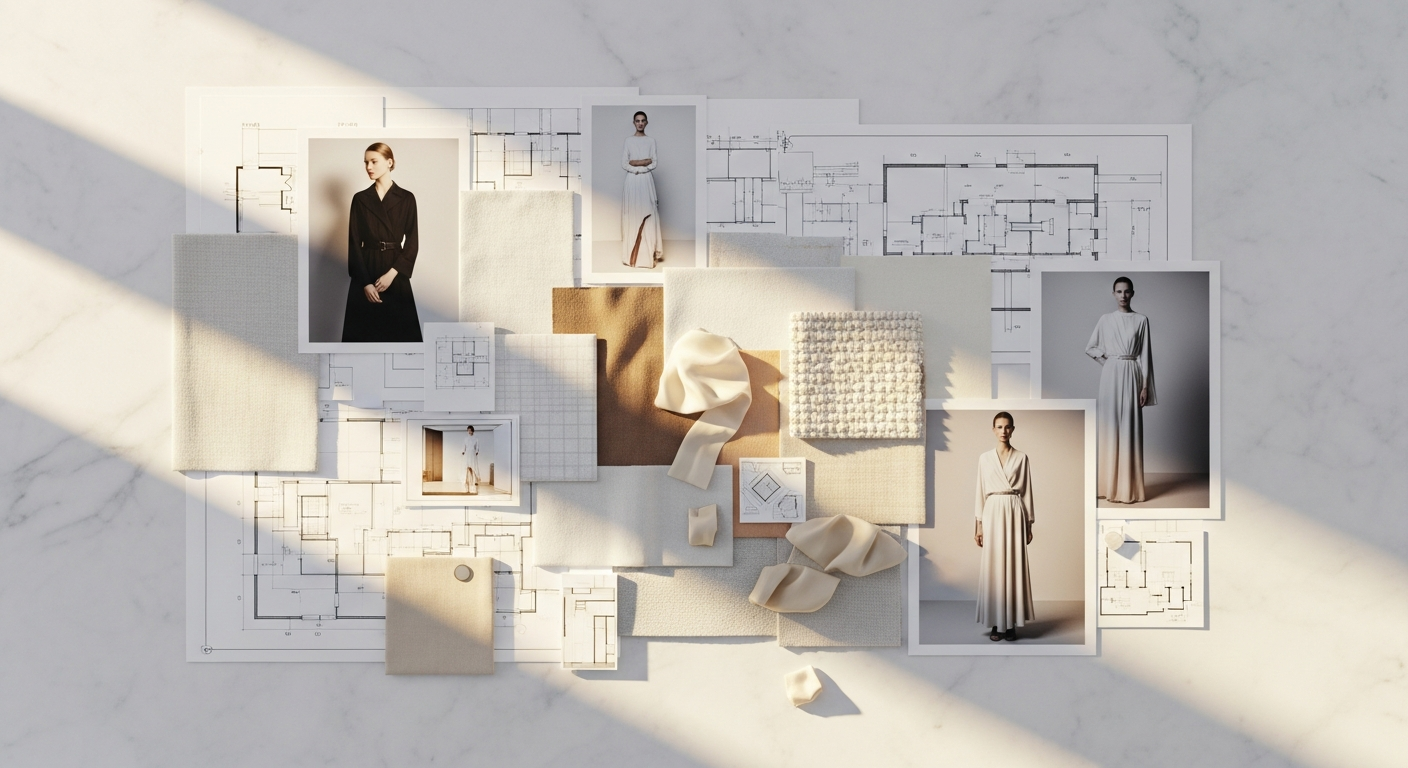
Brand Elevation for Design Studios: What Fashion's Biggest Shift Can Teach You
By Grant Pierrus, founder of Pierrus Agency
Published 2 March 2026
Here's an uncomfortable truth for most interior designers and architects: the gap between the quality of your work and the quality of your brand is probably costing you money.
You're not alone. Fashion just had the same reckoning and the way its biggest brands responded is a masterclass in closing that perception gap.
The problem isn't the product
Over the past three years, brands like Mango, Sandro, COS and Victoria's Secret have all moved upmarket. But the interesting thing is that most of them didn't fundamentally change what they sell. They changed how they present it.
Mango's Instagram used to look like every other high-street brand. Flat product shots on white backgrounds. Today, its feed is indistinguishable from a luxury editorial. The clothes aren't wildly different. But the brand hired the same photographers who shoot for Hermès and Jil Sander, brought in a stylist from Victoria Beckham and Louis Vuitton, and cast Kaia Gerber for its premium campaign. Same DNA. Completely different perception.
Sandro did the same thing with its website. Fabien Baron, the creative director behind campaigns for Dior and Burberry, redesigned it from a transactional shopping layout into an editorial experience. The product range barely shifted. The way it felt shifted entirely.
Victoria's Secret took a different route but landed in the same place. For Valentine's Day 2026, it recreated its iconic Gisele Bündchen shot with Hailey Bieber. The product? Bras. The same category they've always sold. But the cultural moment and the visual storytelling did the elevation work. COS, meanwhile, showed its collection at New York Fashion Week alongside Calvin Klein and Khaite, not because it changed its prices, but because it wanted to change where people placed it mentally.
None of these brands reinvented their product. They reinvented the frame around it.
Brand elevation for design studios
If you run an interior design practice or architecture studio, you've almost certainly experienced a version of this. The work is strong. The clients are happy. But the brand - the website, the proposals, the social media, the way you present completed projects - doesn't match.
The result? You're competing on price when you should be competing on positioning. Clients compare you to studios doing lesser work because from the outside, the two of you look the same.
Fashion's lesson is that closing this gap doesn't require a different business. It requires a different frame. If you want the strategic foundations before the visual work, our guide to brand strategy for interior designers covers the thinking that sits underneath every positioning decision.
The practical shifts
Photography first. Mango's entire perception shift started with better photography. For a design studio, the equivalent is obvious: invest in proper interiors photography. Not iPhone snaps for Instagram. Styled, lit, art-directed shoots that make completed projects look like the portfolio pieces they are. Ask yourself: if a prospective client only ever saw your project photography, would they understand the level you operate at?
Be more selective. Sandro closed 15% of its European stores and 30% in China. Not because it was struggling, but because being everywhere diluted the brand. Fewer, better-chosen locations sent a clearer signal about where Sandro sits. For a design studio, the equivalent is being deliberate about who you work with. Saying yes to every brief keeps you busy but blurs your positioning. The studios that command premium fees are the ones with a clear point of view about the projects they take on. Look at your last ten projects. How many of them would you put in your portfolio? If the answer is less than half, your client filter needs tightening.
Show up in the right rooms. COS didn't need to be at Fashion Week. It chose to be there because context shapes perception. Where does your studio show up? Which awards do you enter? Which publications do you pitch? Which events do you speak at? The room you're in tells people where you sit. Pick one aspirational context you're not currently in and work out what it would take to get there this year.
Create a cultural signal. Sandro collaborated with the estate of Louise Bourgeois and staged its collection at the Musée Bourdelle in Paris. For a design studio, the parallel might be a collaboration with a local artist, a pop-up installation, or a charity project that puts your aesthetic in front of a new audience. Think about who you'd love to collaborate with and what that would say about your studio. Then reach out.
The bottom line
The fashion industry is spending billions on brand elevation and learning that it's a presentation problem, not a product problem. The brands succeeding aren't making fundamentally better clothes. They're making the same quality feel worth more through sharper visuals, tighter curation, and smarter positioning.
Most design studios already have the product. What they're missing is the frame. If you want a practical starting point, The 3 Brand Decks Every Interior Design Studio Needs outlines the three documents that capture your positioning, narrative, and operating standards. And if AI is changing how you think about your creative output, what a morning at Google taught us about AI and creative intelligence explores why your taste and references matter more than ever.
Pierrus Agency helps interior designers and architects build brands that command premium fees. Get in touch to talk about your studio's positioning.
Explore our Marketing for interior designers services, or start a conversation.