Is ChatGPT Sending Customers to Your Trade Brand?
By Grant Pierrus, founder of Pierrus Agency
Published 9 March 2026
You may have a consumer audience you don’t know about yet.
A London-based bespoke furniture manufacturer we work with is receiving four to six calls a week from private clients who found them through ChatGPT. Not through a Google search. Not through a designer referral. Through an AI that looked at an image someone uploaded and said: here’s where that’s from.
These callers have budgets. They know what they want. They’ve already done the research. And they’re landing on a website that was built entirely for the trade.
Most of them don’t call back.
What Is Actually Happening
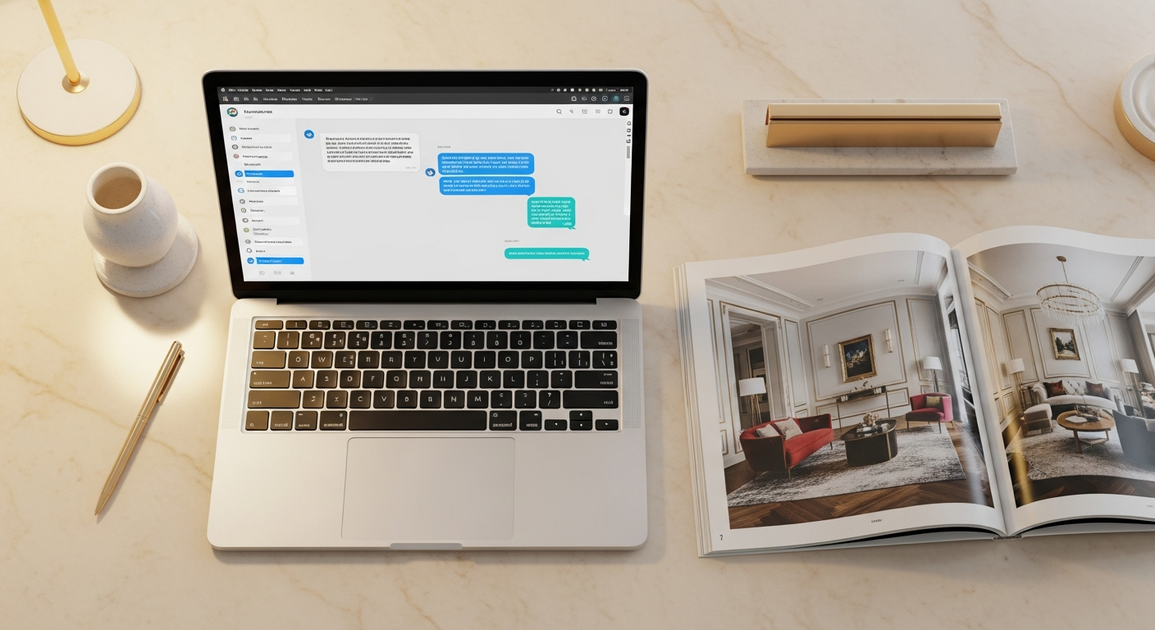
The mechanics are simpler than most people realise. A consumer sees a beautifully photographed interior in a magazine feature, in an Instagram post, on an interior designer’s portfolio site. They take a screenshot and upload it to ChatGPT. They ask: where is that sofa from? Who makes that light fitting? What’s that fabric?
The AI identifies the product, names the brand, and points them to the website.
The same thing happens with Google Lens and Pinterest’s visual search. A consumer photographs something they’ve seen in a showroom or in print and gets an answer within seconds. No keyword research required. No SEO strategy needed on the brand’s part. The product just has to be visible online in enough contexts for the AI to know what it is.
This is a genuinely new discovery channel. And it’s operating whether trade brands are aware of it or not.
Why Trade Brands Are Particularly Exposed
Consumer-facing brands expect uninvited visitors. They plan for them. The whole website is built around converting someone who arrived cold.
Trade brands are built differently. The typical trade website is designed to service existing relationships: account logins, trade price lists, specification downloads, stockist information. It speaks fluently to a designer who already knows the brand. It has almost nothing to say to a private client who has just found you for the first time and wants to know if they can buy from you directly or who to call.
The result is predictable. A warm enquiry with real intent arrives and hits a wall. No obvious path forward, no welcoming language, no clear answer to the most basic question: can I get this, and how?
They leave. The lead disappears without trace. The brand never knew it arrived.
What the AI Is Actually Indexing
This is the part that surprises most trade suppliers: the AI isn’t only looking at your website.
It’s working from the broader web. Press coverage, editorial features in interiors publications, project photography on designer portfolio sites, Instagram posts where your product has been tagged, trade show reviews, product round-ups on interiors blogs. Every time your product appears in a published image anywhere online, that image becomes part of the landscape the AI draws from.
This has an interesting implication. Brands with strong PR histories, good editorial relationships and consistent product photography in circulation are more discoverable via AI than brands who have relied purely on direct trade relationships and kept a low public profile. The better your press coverage over the years, the more likely a private client is to find you through an AI search today.
Good PR has always had a long tail. It turns out that tail is longer than anyone anticipated.
Three Things Worth Doing Now
This doesn’t require a brand overhaul. It requires a clear-eyed audit of what you currently have.
First, look at your website through the eyes of someone who has never heard of you. Is there a visible, welcoming entry point for non-trade enquiries? Is the brand story accessible without logging in? If the answer is no, that’s the starting point.
Second, make sure there is a human path for private client enquiries. A contact form, a phone number, a clear line of copy that acknowledges this person exists. You don’t need to publish retail pricing. You just need to not turn people away.
Third, think about the images you’re putting into the world. Quality editorial photography in respected publications increases AI discoverability as a direct consequence of doing good PR. The two things are now connected in a way they weren’t five years ago.
The Broader Point
Trade brands didn’t ask AI to start routing private clients to their door. It happened anyway.
The question worth sitting with is not whether to engage this audience. That decision has already been made for you. The question is whether your brand is positioned to have a conversation when they arrive, or whether you’re quietly losing enquiries you never knew existed.
For a deeper look at how to position your brand for both trade and consumer audiences without losing credibility with either, we’ve written a companion piece on exactly this challenge.
If you’re a trade supplier starting to think through what this means for your brand, Pierrus Agency works with interior design and architecture businesses on exactly this kind of positioning challenge. Get in touch to start the conversation.
Explore our Marketing for design trade suppliers services, or start a conversation.